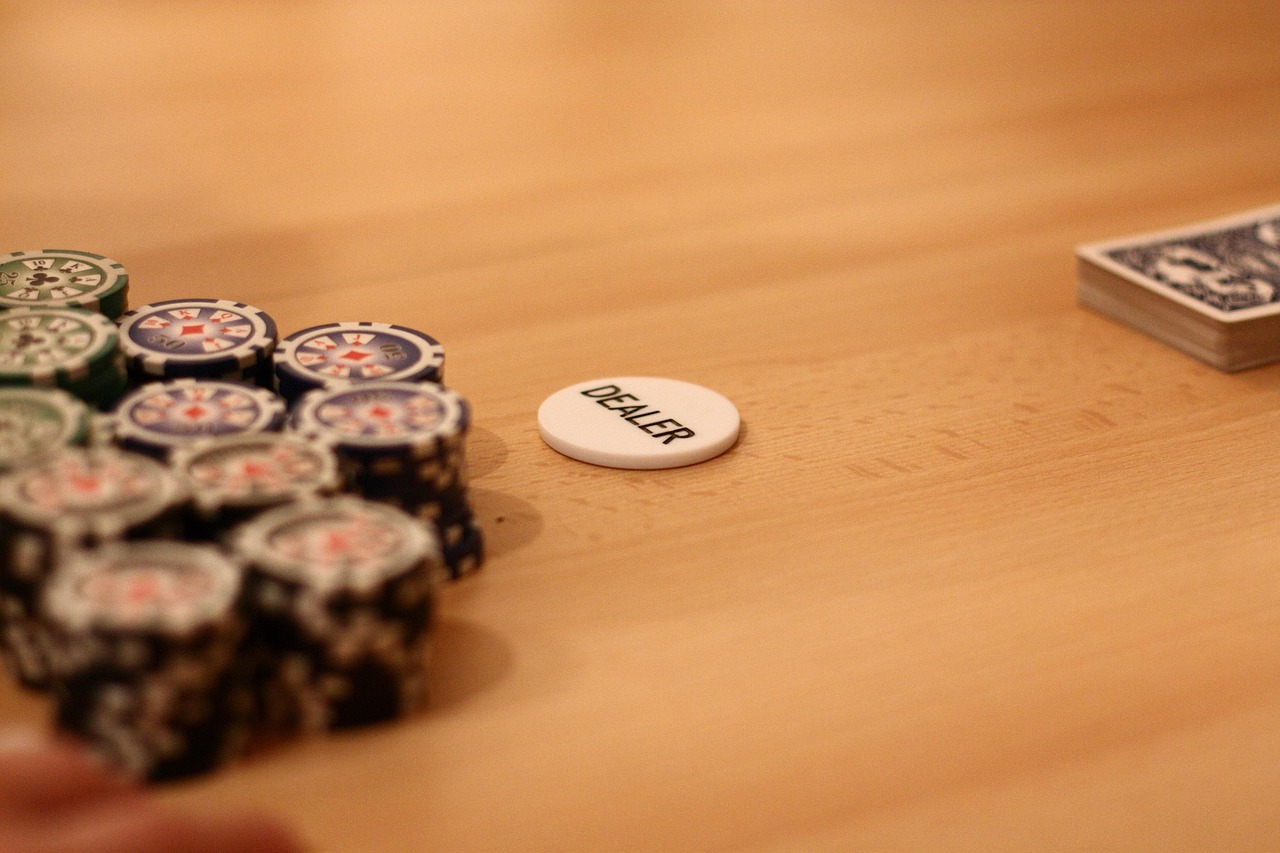
Every gambler has heard the phrase. It's printed on coffee mugs, tattooed on forearms, and whispered by dealers who've seen it all. The house always wins. It's true, statistically speaking—but it's also one of the most misunderstood statements in gambling. The house wins over time, across millions of bets, because of a tiny mathematical edge baked into every game. That edge doesn't stop individual players from walking away up. It just means the casino doesn't need you to lose every night. It only needs you to keep playing.
Understanding that distinction is the difference between being a tourist and being a player. Whether you're spinning slots, grinding poker tables, or betting on football, the math behind the game matters far more than luck, hot streaks, or the color of your lucky shirt. Let's dig into how the games actually work—and where a thinking player can find real edges.
The Hidden Math Behind Every Spin
Slot machines are the engine of the modern casino. They generate somewhere between 70 and 85 percent of gaming revenue in most markets, and for good reason: they're simple, fast, and hypnotic. But that simplicity hides a brutal machine.
Every slot has an RTP—return to player percentage. A game with 96% RTP returns, on average, 96 cents for every dollar wagered over millions of spins. The casino keeps 4%. That sounds small until you realize how many spins an hour a player can rack up. At 600 spins per hour with a $1 bet, that 4% edge quietly drains about $24 an hour. Multiply that across a Saturday night and the math stops looking friendly.
Where it gets interesting is volatility. Two slots can share the same RTP but behave completely differently. A low-volatility game pays small amounts frequently—steady, predictable, dull. A high-volatility game like Money Train or San Quentin might pay nothing for 200 spins, then drop a 5,000x win. Neither is better in expectation. They're just different shapes of the same distribution.
- Check the RTP before you play. Anything under 94% is a bad deal; 96%+ is fair.
- Match volatility to your bankroll. Small budget? Play low volatility. Big budget and patience? Chase the jackpots.
- Never chase bonuses with wagering requirements above 40x. The math rarely works in your favor.
Blackjack: Where Skill Actually Shifts the Edge
Blackjack is the one mainstream table game where a skilled player can flip the house advantage. Basic strategy—a mathematically optimal decision chart for every hand combination—reduces the house edge from around 2% (playing by gut) to roughly 0.5%. That's a hundredfold improvement, just from memorizing a chart.
If you go further and count cards, you can push the edge to 1-2% in your favor. But counting is hard, emotionally exhausting, and casinos don't appreciate it. They'll back you off politely or not-so-politely. Most successful counters work in teams, with spotters and big players, precisely because solo counting gets noticed fast.
For the recreational player, basic strategy is enough. It won't make you rich, but it turns blackjack from a coin flip into a slow bleed you can actually survive. Compare that to roulette—where the house edge is fixed at 2.7% on European wheels (single zero) and a painful 5.26% on American wheels (double zero). If you're playing roulette, always find the single-zero table. Same game, nearly half the edge. For practical tips, check out slot deposit dana.
Poker Is Not Gambling (It's Investing)
Poker is the strange cousin in the iGaming family. Against the house, you can't win long-term. But in poker, you're not playing the house—you're playing other people. The casino just takes a rake.
This changes everything. In poker, a skilled player genuinely beats weaker players over time. The edge comes from decision-making, reading opponents, and understanding ranges. A good player folds 80% of hands preflop. A bad player calls with anything. Over a thousand hands, that difference compounds into a real, measurable win rate.
Online poker has gotten tougher since the poker boom of 2003-2010. Solvers and training tools have raised the collective skill floor. But soft games still exist—particularly live at low stakes, in tourist casinos, and in less popular variants like Omaha Hi-Lo or Stud. If you're serious about poker, pick your tables the way a hunter picks a forest. The fish determine your win rate, not your cards.
Betting Markets: Where Information Beats Luck
Sports betting looks like a coin flip wrapped in an algorithm. It isn't. Bookmakers price in a margin—typically 4-8% on a standard two-way market—and then adjust as money comes in. Your job as a bettor is to find spots where the bookmaker's price is wrong.
Sharp bettors live and die by closing line value (CLV). If you consistently bet at better odds than the closing price, you're beating the market, even if you lose that individual bet. CLV is the closest thing sports betting has to a scoreboard for skill.
- Line shop relentlessly. The same match might be +150 at one book and +165 at another. That difference is your edge.
- Specialize in one or two leagues. Depth beats breadth. Know injury reports, weather, travel schedules.
- Ignore parlays unless you're chasing fun. They're high-variance, high-margin products designed for entertainment, not profit.
- Track every bet. A spreadsheet is worth more than a hot tip.
Bankroll Management: The Skill Nobody Talks About
You can have a PhD in probability and still go broke by betting too big. Bankroll management is the unsexy discipline that separates players who last from players who flame out.
A practical framework: never risk more than 1-2% of your bankroll on a single bet or spin. At 1%, a 20-buy-in downswing—which happens regularly in poker and slots—only dents you. At 10%, the same downswing wipes you out. Variance is not optional; it's guaranteed. Plan for it.
Set win limits and loss limits before you sit down. If you hit either, stop. Not tomorrow, not after one more spin—stop. The house edge only activates over volume. Reduction in volume is reduction in exposure to the edge.
The Honest Bottom Line
Casinos aren't evil and gambling isn't inherently foolish. But the industry is built on a mathematical truth: most players lose over time. The ones who don't are either lucky, skilled, or disciplined enough to manage the math instead of ignoring it.
That's the real insider secret. Not a system, not a hack, not a slot machine with a loose cycle. Just clear-eyed understanding of edge, variance, and volume—and the humility to walk away when the numbers turn against you. Treat the casino like a business, and you might just come out ahead. Treat it like a magic show, and you'll be paying for the ticket every single time.